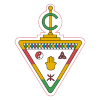
TEST In Morocco and North Africa, the original inhabitants of these lands are often called «
Berbers ». This term appears in travel guides, history books and brochures
touristic. But it is not their own name, and it carries a history that does not correspond to
who they really are.
These peoples call themselves Imazighen (plural), and a person is an Amazigh
(masculine) or a Tamazight (feminine). This word means, simply and powerfully :
« Free man »
« Noble being »
« Dignified being »
It is neither a nationalist claim, nor a political positioning, nor a trendy word.
It is simply their original name, used for millennia.
Where does the word « Berber » come from ?
« Berber » is a designation that came from outside. It goes back to the Greek barbaros and then to the Latin barbarus — terms used by ancient empires to designate those who did not speak Greek or Latin.
In summary :
barbaros = one who speaks differently than us.
At the time, it did not mean « barbaric » in the violent sense of the modern word, but there was
indeed a nuance of contempt: someone outside our civilisation.
When the Arab conquerors later arrived in North Africa, they took up this term
in Arabic al-barbar. The word has never described an identity. It only served as an external label, based on a linguistic difference and a power relationship.
That is why today, many Imazighen choose their own name — Amazigh
— to describe themselves as they have always been: a people with their culture, their language and their origins.
Morocco Home fits into this logic, as we work with the people themselves
and not with colonial terminological legacies. Why we speak about Amazigh…
The meaning of the Yaz symbol (ⵣ)
The red symbol that is often seen — on flags, jewellery, textiles or
works of art — is called Yaz or the letter Yaz. It comes from the Tifinagh alphabet, the ancient Amazigh writing system. But it is much more than just a letter: it is a symbol of identity and dignity.
Here is how it is understood in most of North Africa:
ⵣ = the free man standing between heaven and earth with arms and legs open, in presence, strength and dignity. It represents a human being upright, open, grounded, not submissive. Not as a political gesture, but as an existential and spiritual posture.
The three lines symbolise:
top line: the link with the world above, the invisible
middle line: the human body, the living being
bottom line: the earth, the rooting and the territory
This symbol conveys strength, a sense of continuity. It can be found in villages, in markets, in the arts, on doors, jewellery, and in many everyday objects.
For many, ⵣ is a visual way of saying: " We are here. We are free. We exist. "
Why Morocco Home chooses these terms:
Morocco Home works with Amazigh families, artisans, and artists. They are the ones who use the word Amazigh to name themselves. They are the ones who carry the symbol ⵣ as a natural part of their heritage. They do not use it for marketing reasons, but out of identity. We therefore adopt their own designation, and not the name once given by people from elsewhere. Not to oppose us, not to do politics, but out of respect for those with whom we collaborate every day.
Amazigh is their word.
ⵣ is their symbol.
And we follow their language.